

Issue Briefs

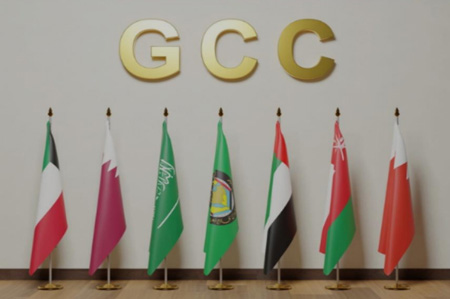
Structural Constraints and Strategic Inertia: Rethinking Gulf Security After Israel’s Doha Attack
This Issue Brief analyses the structural limitations of the Gulf security framework in light of Israel’s unprecedented attack in Doha on 9 September, targeting Palestinian Hamas leadership. While the attack marked a dangerous escalation of Tel Aviv’s regional adventurism, it also exposed the enduring structural weaknesses of the Gulf’s security architecture which has been defined by entrenched dependency on the United States.
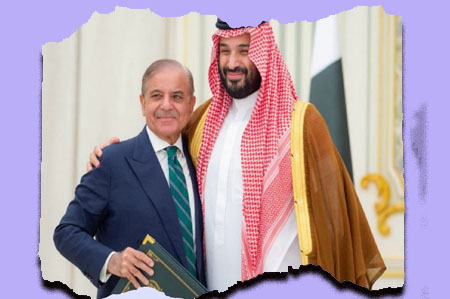
Beyond Symbolism: Can Pakistan Become West Asia’s Net Security Stabiliser?
This issue brief explores whether Pakistan can evolve from a traditional “security contractor” into West Asia’s net security stabiliser. The September 17, 2025, Saudi-Pakistan Strategic Mutual Defence Agreement marks a pivotal moment, formalising decades of military cooperation between the two countries. Historically, Pakistan has trained Gulf forces, guarded monarchies, and provided military personnel, often in transactional arrangements....
From Protest to Power: Can JNP reshape Bangladesh’s Political Future?
The Jatiya Nagorik Party (JNP)— born out of the Students Against Discrimination (SAD) movement, that steered the July 2024 uprising in Bangladesh— is seeking to break the decades-long dominance of the Awami League and BNP, and advocating for a Second Republic through constitutional reform and centrist, pluralist governance. As it navigates entrenched power structures and competing opposition forces, it faces both great promise and uncertain challenges in its quest to reshape the nation’s political future.
Books/Journals
You haven’t created any frontpage content yet.
Congratulations and welcome to the Drupal community.
Drupal is an open source platform for building amazing digital experiences. It’s made, used, taught, documented, and marketed by the Drupal community. Our community is made up of people from around the world with a shared set of values, collaborating together in a respectful manner. As we like to say:
Come for the code, stay for the community.
Get Started
There are a few ways to get started with Drupal:
- User Guide: Includes installing, administering, site building, and maintaining the content of a Drupal website.
- Create Content: Want to get right to work? Start adding content. Note: the information on this page will go away once you add content to your site. Read on and bookmark resources of interest.
- Extend Drupal: Drupal’s core software can be extended and customized in remarkable ways. Install additional functionality and change the look of your site using addons contributed by our community.
Next Steps
Bookmark these links to our active Drupal community groups and support resources.
- Global Training Days: Helpful information for evaluating Drupal as a framework and as a career path. Taught in your local language.
- Upcoming Events: Learn and connect with others at conferences and events held around the world.
- Community Page: List of key Drupal community groups with their own content.
- Get support and chat with the Drupal community on Slack or DrupalChat. When you’re looking for a solution to a problem, go to Drupal Answers on Stack Exchange.


Comments
Recent Trends in India- European Union Partnership: Towards a New Paradigm amidst Competitive Diplomacy
Mohammed Badrul Alam
The European Union (EU) is a political, economic union of 27 member states that are located geographically within the continent of Europe. It is a supra-national union with a total area of 1,634, 469 square miles and with an estimated population of 452 million as of 2026.
The July 2026 Balochistan Attacks Expose the Limits of Coercive Approach in Pakistan
Mohammed Shoaib Raza
The July 2026 Balochistan attacks by the TTP and BLA exposed critical vulnerabilities in Pakistan's security state, proving that kinetic military operations cannot substitute for dialogue and political reconciliation.
Forthcoming BRICS Summit 2026 in Delhi : Can India Seize the Moment?
Mohammed Badrul Alam
India chairs the 2026 BRICS Summit amid geopolitical turmoil, balancing internal divides and global pressures. Its agenda prioritises resilience, innovation, and Global South solidarity for a more equitable world order.